How we work matters as much as what we deliver.
Clear principles, a structured approach, and senior consultants who own the work end to end.

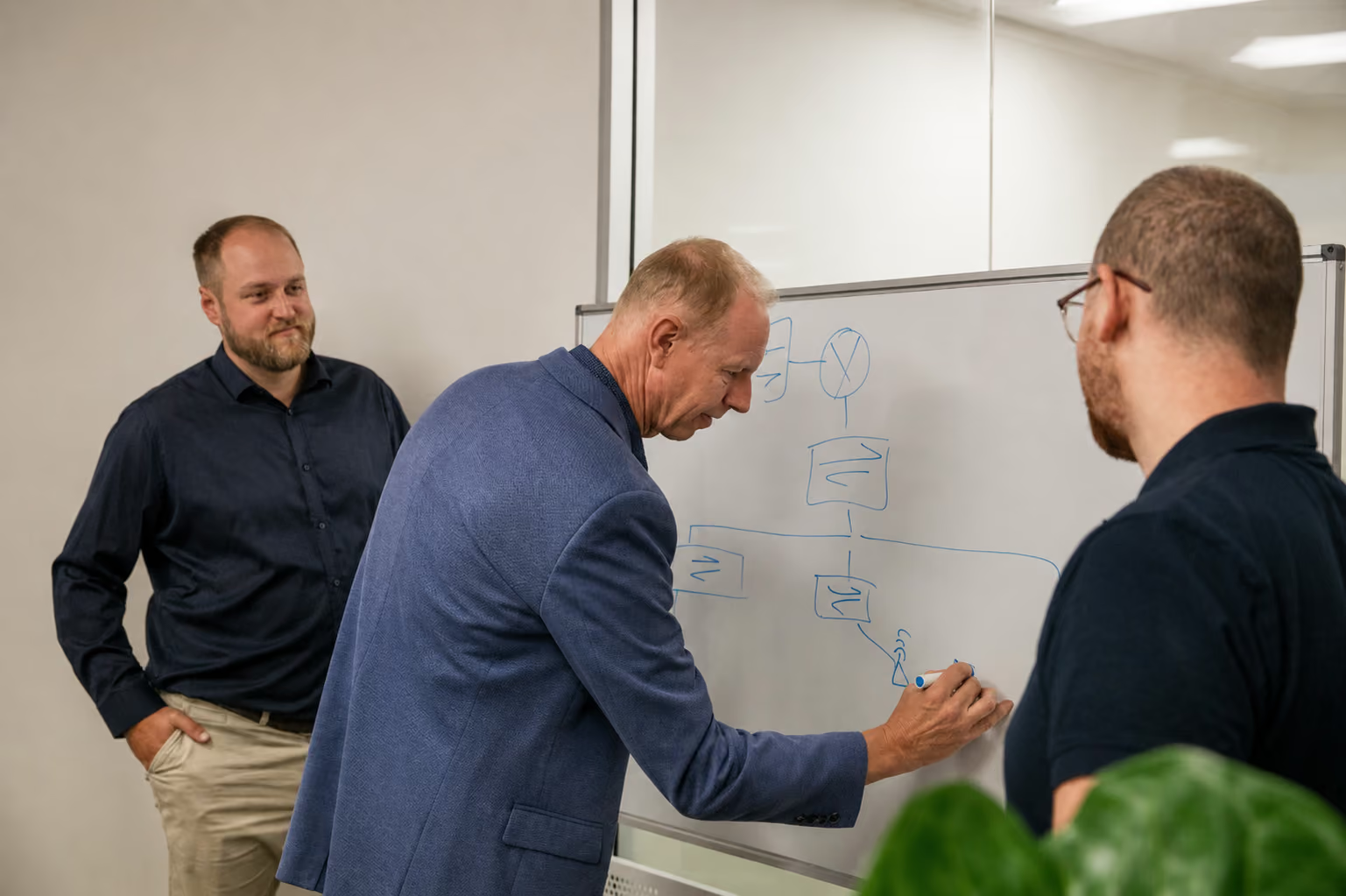
Effective security work depends on more than technical accuracy. The findings need to be understood, the controls need to fit the environment, and the frameworks need to be applied with care. Otherwise, risks end up being merely documented, not reduced.
We've built our approach around what consistently works: principles that guide every engagement, and a delivery model that turns those principles into repeatable outcomes.
Security-first, not compliance-led.
We design for genuine risk reduction. When the work is grounded in real security outcomes, compliance follows naturally, and the controls you put in place actually protect the organisation rather than just satisfying an auditor.
Independent by design.
We don't run an MSP on the side. Our recommendations are shaped by your risk and your context, not by an interest in becoming your long-term operations provider. That independence is what makes the advice worth taking.
Aligned to recognised standards.
We work to ISO 27001, the ACSC Essential Eight Maturity Model, CREST testing standards, and other recognised frameworks. There's no value in reinventing the wheel. Clients benefit from approaches that are proven, defensible, and understood by the auditors, regulators, and stakeholders who'll review the work.
Senior-led delivery.
Every engagement is led and delivered end to end by an experienced consultant. The person who scoped the work is the person doing it, writing the report, and walking you through the findings. Clear accountability, sharper judgement, and no hand-offs.
Practical and fit-for-purpose.
Security has to work in the real world, alongside operational pressures, finite budgets, and the way your team actually operates. We design controls, reports, and recommendations that fit your environment rather than fighting it.
The principles that shape how we work.
Principles are easy to publish and harder to hold. These are the ones we apply on every engagement: how we scope the work, what we recommend, and how we report on what we find. They hold whether the work is advisory, testing, or incident readiness.
How those principles show up in delivery.
Security that sits on a shelf helps no one, so we support clients beyond the engagement, answering questions through remediation, walking stakeholders through the findings, and building the kind of longer relationships where it makes sense.
We understand what matters
Security advice only works when it fits the organisation it's meant to protect. We start by understanding your context, your systems, and what actually matters to you. That ensures the work is relevant to your risks and your organisation, not a generic checklist.
We agree on scope and expectations
Shared expectations create predictable outcomes. Before any work begins, we agree on scope, objectives, and constraints. You'll know what's being tested or assessed, how it'll be done, and what the outputs will look like. No surprises.
We deliver the work
Confidence in your security comes from evidence, not assumptions. Our senior consultants carry out the work methodically and to a defined scope, balancing thoroughness with care to avoid unnecessary disruption.
We provide clear, prioritised outcomes
Findings are analysed in context and prioritised based on real-world risk. You'll receive clear, defensible outputs that support decision-making, not just technical detail.
The standards behind the work.
Frameworks and standards we help clients with:
Information security, privacy, and AI
ISO 27001, ISO 27701, and ISO 42001. Management system standards covering information security, privacy, and the responsible use of AI.
NIST Cybersecurity Framework (CSF) and NIST Risk Management Framework (RMF). Internationally recognised frameworks for managing cyber risk and security controls.
Australian government and regulator expectations
ACSC Essential Eight Maturity Model. Practical baseline controls for mitigating cyber threats.
APRA CPS 234. Information security obligations for APRA-regulated entities.
SOCI Act obligations, including Critical Infrastructure Risk Management Programs (CIRMP) and Telecommunications Sector Risk Management Plans (TSRMP).
Defence Industry Security Program (DISP). Security requirements for organisations working with the Department of Defence.
Recognised standards give an engagement a shared language. The boards, auditors, regulators, and procurement teams who review the work already understand what to expect, so our findings, recommendations, and reports land in a form they can act on confidently.

Let's talk about where you are and where you need to be.
Whether you're preparing for certification, validating your controls, or building security foundations for growth, we'll help you get there with clarity and confidence.